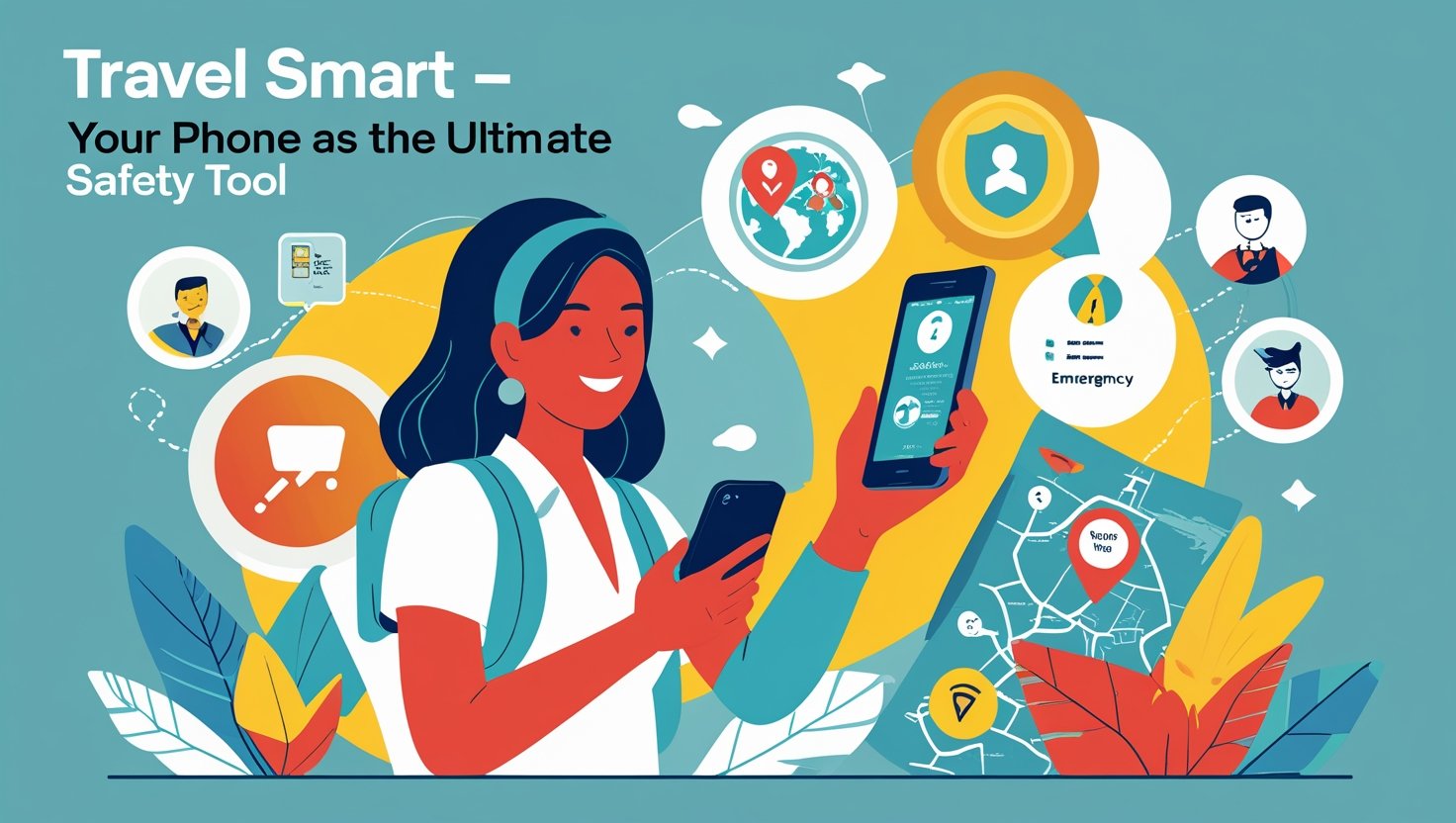
What if your most valuable travel companion was already in your pocket? Your smartphone isn’t just a device for selfies and navigation, it’s a sophisticated safety arsenal that can literally save your life when you travel smart. From emergency alerts to invisible tracking, your phone holds untapped potential as the ultimate safety tool for modern travelers.
Transforming Your Phone Into a Safety Fortress:
Your smartphone contains dormant safety features that most travelers never activate. Beyond basic apps, your device features advanced security protocols that can transform ordinary travel into smart, seamless travel experiences.
Modern phones integrate multiple safety layers simultaneously. Emergency SOS functions, medical ID access, and automatic location sharing create a comprehensive safety network that operates even when you’re unconscious or unable to communicate.
The Invisible Safety Grid:
Smart travel begins with understanding your phone’s hidden capabilities:
- Emergency SOS activation – Multiple button presses trigger automatic emergency calls
- Medical ID accessibility – Critical health information accessible from the lock screen
- Automatic crash detection – Advanced sensors detect accidents and call for help
- Silent distress signals – Covert ways to alert authorities without alerting threats
- Location breadcrumbs – Continuous tracking that the family can monitor remotely
These safety features operate independently of internet connectivity, making them reliable travel companions in any situation.
Advanced Privacy Protection Strategies:
Smart travel requires mastering your phone’s stealth capabilities. Beyond airplane mode, advanced privacy settings can make you digitally invisible while maintaining safety connectivity.
Phantom mode techniques allow travelers to use their phones without leaving digital footprints. These methods prove crucial when traveling to countries with heavy surveillance or when personal safety depends on digital invisibility.
The Digital Camouflage Toolkit:
Advanced privacy protection involves multiple layers:
- VPN tunneling with kill switches for secure connections
- Decoy app installations that hide sensitive information
- Biometric spoofing protection against forced device access
- Emergency wipe protocols for captured devices
- Mesh networking for communication without cellular towers
These stealth strategies ensure your phone remains your safety tool even in compromised environments.
Crisis Communication Networks:
Smart travel preparation includes backup communication methods that function when primary networks fail. Your phone can access multiple emergency networks simultaneously, ensuring safety connectivity in disaster scenarios.
Satellite emergency features now available in newer smartphones provide literal lifelines when terrestrial networks collapse. These safety systems can transmit location data and emergency messages even from remote wilderness areas.
The Emergency Communication Arsenal:
Crisis communication capabilities include:
- Satellite SOS messaging for areas without cellular coverage
- Mesh network connectivity with nearby devices
- Emergency frequency access to local authorities
- Automated distress broadcasting across multiple platforms
- Family notification systems with location updates
This communication redundancy ensures your safety messages reach help regardless of local infrastructure failures.
Your Body as the Ultimate Password:
Smart travel security extends beyond passwords to biometric authentication that can’t be stolen or forgotten. Your phone can recognize multiple biological markers simultaneously, creating unbreakable safety barriers.
Advanced biometric features include heart rate authentication, gait recognition, and even stress level detection. These safety measures can automatically trigger emergency protocols when your phone detects physical or psychological distress.
The Biological Security Matrix:
Biometric safety systems encompass:
- Multi-factor biological authentication combining fingerprint, face, and voice
- Stress-level monitoring that triggers automatic safety alerts
- Gait analysis that detects if you’re walking under duress
- Heart rate anomaly detection for medical emergencies
- Behavioral pattern recognition that identifies unusual activity
These biological safety measures create an intelligent phone that understands your physical state and responds accordingly.
AI-Powered Danger Detection:
Smart travel involves leveraging artificial intelligence to predict and avoid dangers before they manifest. Your phone can analyze patterns, monitor social media, and assess real-time risk factors to guide safety decisions.
Predictive algorithms process massive data streams to identify emerging threats in your travel area. This intelligence allows proactive safety measures rather than reactive emergency responses.
The Threat Prediction Engine:
AI-powered safety analysis includes:
- Social media threat monitoring for your destination
- Crime pattern recognition based on historical data
- Weather emergency prediction with evacuation recommendations
- Political instability assessment for changing travel conditions
- Health outbreak tracking for disease prevention
This predictive intelligence transforms your phone into a safety crystal ball that sees dangers before they appear.
Mental Health Protection Protocols:
Smart travel recognizes that safety includes psychological well-being. Your phone can monitor mental health indicators and provide safety interventions when stress, anxiety, or depression threaten your travel experience.
Mental health monitoring apps analyze speech patterns, typing rhythms, and app usage to detect psychological distress. These safety systems can automatically connect you with support resources or alert emergency contacts.
The Mental Health Safety Net:
Psychological protection features include:
- Stress level monitoring through voice analysis
- Anxiety detection via typing pattern changes
- Depression indicators from app usage patterns
- Panic attack prediction using biometric data
- Automated intervention connecting to mental health resources
This psychological safety monitoring ensures your phone protects both your physical and mental well-being during travel.
Documentary Evidence Collection:
Smart travel preparation includes configuring your phone to automatically collect legal evidence in case of disputes, crimes, or emergencies. Your device can continuously document interactions and preserve safety evidence.
Automatic recording protocols can capture audio, video, and location data when triggered by specific keywords or situations. This safety documentation provides crucial evidence for insurance claims, legal proceedings, or emergency response.
The Legal Evidence Arsenal:
Documentation safety features include:
- Triggered recording based on voice stress or keywords
- Continuous location logging with timestamps
- Automatic cloud backup of safety evidence
- Biometric verification of recorded evidence
- Emergency evidence sharing with designated contacts
This legal protection ensures your phone serves as both a safety tool and an evidence collection system.
Financial Security Integration:
Smart travel extends phone safety to financial protection. Advanced security features can monitor spending patterns, detect fraud, and provide emergency financial access when traditional methods fail.
Financial safety protocols include automated spending alerts, emergency fund access, and even cryptocurrency backup systems that function independently of traditional banking infrastructure.
The Financial Safety Network:
Economic protection features encompass:
- Real-time fraud detection with automatic card suspension
- Emergency fund access through multiple financial institutions
- Cryptocurrency backup for countries with banking restrictions
- Spending pattern analysis to detect unauthorized usage
- Emergency credit activation for unexpected situations
This financial safety integration makes your phone a comprehensive economic protection tool.
Creating Safety Ecosystems:
Smart travel involves creating safety ecosystems where multiple devices work together. Your phone can coordinate with tablets, smartwatches, and even rental car systems to provide comprehensive safety coverage.
Device synchronization ensures that safety protocols remain active even if your primary phone is lost, stolen, or damaged. This redundancy creates multiple safety layers that protect you throughout your journey.
The Synchronized Safety Web:
Multi-device protection includes:
- Automatic safety backup across all connected devices
- Emergency access through secondary devices
- Coordinated tracking across multiple platforms
- Shared safety protocols with travel companions
- Redundant communication through device networks
This ecosystem approach ensures your safety systems remain operational regardless of individual device failures.
Cultural Intelligence Integration:
Smart travel requires understanding local safety customs and regulations. Your phone can adapt its safety features based on destination-specific requirements and cultural sensitivities.
Cultural safety adaptation includes understanding local emergency numbers, legal restrictions on recording, and appropriate communication methods with local authorities.
The Cultural Safety Compass:
Local adaptation features include:
- Destination-specific emergency protocols with local numbers
- Cultural communication guidelines for interacting with authorities
- Legal restriction awareness for recording and privacy
- Local safety custom integration for respectful behavior
- Language-specific safety phrases for emergency communication
This cultural intelligence ensures your phone remains an effective safety tool regardless of your destination.
Future-Proofing Your Safety Arsenal:
Smart travel means preparing for safety technologies that are rapidly evolving. Your phone will soon integrate augmented reality threat detection, quantum encryption, and neural interface capabilities.
Emerging safety technologies include holographic emergency displays, thought-controlled emergency activation, and AI companions that provide 24/7 safety monitoring and advice.
The Next-Generation Safety Suite:
Future safety capabilities will include:
- Augmented reality threat identification and avoidance
- Quantum encryption for unbreakable communications
- Neural interface emergency activation through thought
- Holographic display for emergency information
- AI safety companions providing continuous protection
These emerging technologies will transform your phone into an even more powerful safety tool.
Conclusion:
Your smartphone represents the most sophisticated safety tool ever created for travelers. By mastering its hidden capabilities, you transform ordinary travel into smart travel experiences where safety becomes seamless and comprehensive. From crisis communication to predictive intelligence, your phone offers protection that extends far beyond traditional safety measures, making it truly the ultimate safety tool for modern adventurers.
FAQs:
Q1: How can my phone work as a safety tool without an internet connection?
A: Your phone has offline safety features like emergency SOS, medical ID access, and GPS tracking that work without internet.
Q2: What should I do if my phone gets stolen while traveling?
A: Activate remote wipe features immediately, use Find My Device tracking, and contact your emergency contacts through backup methods.
Q3: Can my phone automatically call for help in emergencies?
A: Yes, modern phones have crash detection and emergency SOS features that can automatically call authorities and share your location.
Q4: How do I protect my personal data while traveling internationally?
A: Use VPN services, enable biometric locks, avoid public Wi-Fi, and activate travel mode privacy settings.
Q5: What are the most important safety apps for travelers?
A: Essential safety apps include emergency SOS, medical ID, location sharing, VPN services, and offline maps.
Q6: How can I use my phone to stay safe in countries with internet restrictions?
A: Use mesh networking, satellite communication, offline safety features, and encrypted messaging apps that work without traditional internet.