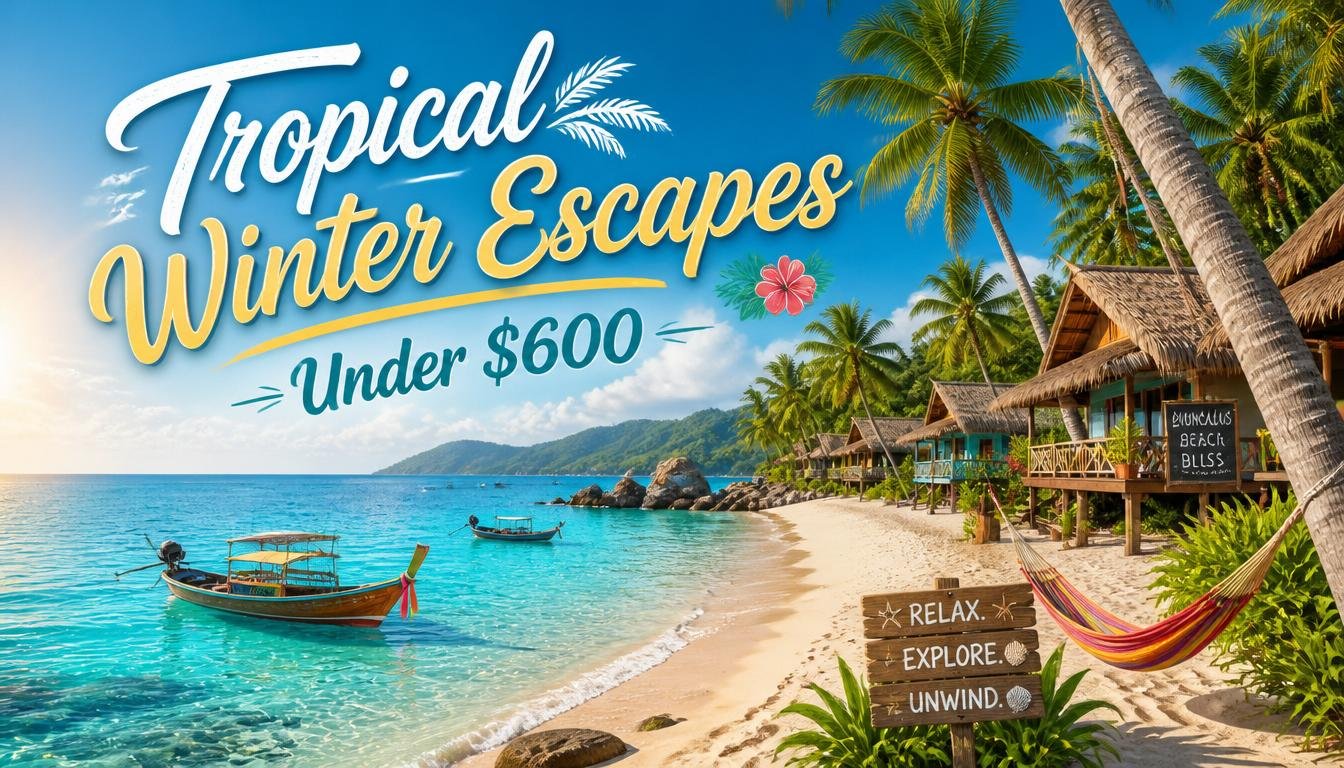
I once spent a freezing Tuesday morning wrapped in three blankets, scraping ice off my windshield with a cracked credit card, wondering why on earth I lived in a place where the air hurts my face. I had exactly $600 left in my savings account after the holiday rush, and every travel website I checked told me that a tropical winter getaway was completely out of the question unless I wanted to max out a credit card. They were wrong.
The secret to escaping the winter chill without breaking the bank isn’t about cutting corners or staying in sketchy places. It is about understanding how to leverage local economies where your money transforms into a small fortune.
1. Phu Quoc Island, Vietnam: The Pearl of the Gulf of Thailand:
When I first stepped off the ferry onto Phu Quoc, the warm air smelled faintly of sea salt and roasting white pepper. This island, sitting quietly in the deep blue waters of the Gulf of Thailand, has rapidly become one of the most compelling value destinations in Southeast Asia. While the northern half of the island features glitzy, master-planned amusement parks, the central and southern coasts still retain the raw, laid-back charm of a classic tropical haven.
The True Vibe:
Phu Quoc feels like two distinct worlds stitched together by a single red-dirt highway. On one side, you have dense, emerald-green national park jungles hiding cascading waterfalls. On the other side, you have endless stretches of powdery white sand lined with leaning coconut palms. The local culture revolves completely around the ocean, visible in the sprawling evening night markets where hundreds of fishing boats unload their daily catch directly onto beds of crushed ice.
Where to Stay on a Budget:
Forget the massive luxury resorts that cost hundreds of dollars a night. The real magic of Phu Quoc lies in its family-run homestays and eco-bungalows tucked into the hillsides just off Long Beach (Bai Truong) or Ong Lang Beach. For around $20 to $25 a night, I stayed in a private, air-conditioned garden bungalow complete with a hammock on the porch, fast internet, and a host family who brought me fresh slices of sweet mango every single morning.
Dining Like a King for Pennies:
The culinary landscape here is a paradise for budget travelers. Your food budget will go remarkably far if you step away from the tourist-heavy beachfront grills and head toward the local plastic-stool joints.
- Breakfast: A steaming bowl of Bun Quay (Phu Quoc seafood noodle soup) costs around $2.00. The noodles are made fresh to order right in front of your eyes, served with fresh shrimp paste, squid, and a mountain of local herbs.
- Lunch: A crispy, warm Banh Mi stuffed with pate, grilled pork, and pickled cucumbers picked up from a street cart costs less than $1.50.
- Dinner: At the Duong Dong Night Market, you can point to a live red snapper, watch them grill it over hot charcoal with lemongrass and chili, and enjoy a full seafood feast with a cold local Bivina beer for under $8.00.
Epic Exploits That Cost Next to Nothing:
You do not need pricey tour operators to experience the best of the island. For $5.00 a day, you can rent a fully automatic scooter and explore the entire coastline on your own terms.
Drive down to Sao Beach on the southern tip to swim in crystalline, ankle-deep water that looks like liquid glass. To experience something truly breathtaking, spend $12.00 on a ticket for the Hon Thom Cable Car. It is officially the longest over-sea cable car ride in the entire world. As you glide high above the ocean for nearly eight kilometers, you get a bird’s-eye view of coral reefs, tiny fishing villages, and hundreds of wooden boats floating on turquoise water.
The 7-Day Expense Sheet:
| Expense Category | Estimated Cost (USD) | What You Actually Get |
| Accommodation | $154.00 | 7 Nights in a highly rated, air-conditioned garden bungalow. |
| Food & Drink | $105.00 | Three massive, delicious meals every day plus fresh coconuts. |
| Local Transport | $45.00 | 7 Days of scooter rental plus fuel to explore the island. |
| Activities | $35.00 | Cable car ticket, national park entry fees, and island tours. |
| Total Spent | $339.00 | Remaining Buffer: $261.00 |
2. Krabi and Koh Lanta, Thailand: Majestic Limestone Paradises:
There is a specific moment when you turn the corner on a wooden longtail boat in Krabi and see a thousand-foot limestone cliff rising straight out of the warm Andaman Sea. It takes your breath away. While spots like Phuket have grown increasingly expensive and crowded, the neighboring province of Krabi and the sleepy island of Koh Lanta offer the quintessential Thai beach experience at a fraction of the cost.
The True Vibe:
Krabi is an outdoor adventurer’s dreamscape mixed with old-school bohemian beach culture. The air is warm, the limestone karst mountains are draped in thick green jungle, and the water stays at a perfect, bath-like temperature all winter long. If you want a bit of lively nightlife and beach fire shows, you stay near Ao Nang. If you want utter serenity where the loudest sound is the waves lapping against the shore, you take a short car ferry down to Koh Lanta.
Where to Stay on a Budget:
In the beach town of Klong Khong on Koh Lanta, boutique bamboo resorts sit just steps from the sand. I spent a week living in a beautifully crafted wooden cabin surrounded by banana trees for just $18 a night. The resort had a sparkling swimming pool, free water refills, and an open-air yoga deck. If you prefer to stay on the mainland in Krabi, look for guesthouses tucked away in Krabi Town or near Nopparat Thara beach, where clean, modern rooms run well under $22 per night.
The Art of the Night Market:
Southern Thai food is famous for its bold, fiery flavors, rich coconut curries, and incredible depth. You can easily eat like royalty on a tiny budget by embracing the local food markets.
- Massaman Curry: A rich, comforting bowl of curry loaded with tender potatoes, roasted peanuts, and chicken costs around $3.00 at any local village restaurant, always served with a mountain of jasmine rice.
- Pad Thai & Som Tum: Street food stalls along the beach will whip up a plate of stir-fried Pad Thai noodles right in front of you for $2.00. Pair it with a spicy, fresh green papaya salad for an extra $1.50.
- Fruit Shakes: Freshly blended mango, pineapple, or passionfruit smoothies cost around $1.25 and serve as the perfect midday heat reliever.
Epic Exploits That Cost Next to Nothing:
The best things to do in Krabi cost almost nothing. You can take a local shared longtail boat from Ao Nang over to Railay Beach for just $3.00 each way. Railay is a world-famous peninsula completely cut off from the mainland by massive cliffs, meaning there are zero cars, zero roads, and pure tropical peace.
If you feel adventurous, head inland to the Tiger Cave Temple (Wat Tham Suea). It costs absolutely nothing to enter, but you will have to climb 1,260 steep concrete steps up the side of a mountain. At the summit, you are rewarded with a giant golden Buddha sitting among the clouds and a panoramic, 360-degree view of the entire province.
On Koh Lanta, spend a day driving your scooter down to the Mu Ko Lanta National Park at the southern tip of the island. For a $6.00 entry fee, you get access to completely untouched beaches, a historic white lighthouse, and wild monkeys swinging through the trees.
The 7-Day Expense Sheet:
| Expense Category | Estimated Cost (USD) | What You Actually Get |
| Accommodation | $133.00 | 7 Nights in a boutique bamboo cabin with a pool. |
| Food & Drink | $112.00 | Endless curries, fresh tropical fruits, and night market treats. |
| Local Transport | $50.00 | Scooter rental, fuel, and island ferry transfers. |
| Activities | $40.00 | Longtail boat trips, national park entries, and temple climbs. |
| Total Spent | $335.00 | Remaining Buffer: $265.00 |
3. Puerto Escondido, Mexico: The Bohemian Surfer Haven:
Tucked away on the wild Pacific coast of the state of Oaxaca lies Puerto Escondido. For decades, this town was a tightly guarded secret among the world’s elite surf community who came to ride the legendary Zicatela waves. Today, it has evolved into a vibrant, sun-drenched oasis for budget-conscious travelers seeking an authentic slice of coastal Mexico far removed from the mega-resorts of Cancun or Cabo.
The True Vibe:
Puerto Escondido is delightfully rough around the edges. No high-rise hotels are blocking the sunset here. Instead, you find sandy dirt roads, palapa-roofed cafes, open-air mezcal bars, and a deep focus on wellness and nature. The daytime is hot and slow-paced, with everyone hiding in the shade of palm trees. As soon as the sun dips below the horizon, painting the Pacific sky in brilliant shades of pink and orange, the town comes alive with acoustic music, beach volleyball, and artisanal night markets.
Where to Stay on a Budget:
The town is divided into several neighborhoods, each with its own unique personality. For budget travelers, the neighborhoods of La Punta and Rinconada are absolute goldmines.
You can easily secure a private room in a beautiful, bohemian eco-lodge or a local family guesthouse for $25 to $30 a night. Many of these properties feature shared outdoor kitchens, lush hammocks shaded by mango trees, and communal rooftop spaces perfect for watching the morning surf swell.
Coastal Oaxacan Culinary Magic:
Oaxaca is universally recognized as the culinary heart of Mexico, and that gastronomic brilliance extends right to the ocean shore.
- Fish Tacos: Head to the tiny, legendary seafood stalls near Playa Carrizalillo. You can get three massive, crispy fish or shrimp tacos loaded with fresh cabbage slaw, chipotle cream, and homemade salsa for less than $4.50 total.
- Tlayudas: Think of this as an Oaxacan pizza. A massive, crispy corn tortilla smeared with black bean paste, avocado, stringy quesillo cheese, and grilled meats costs around $5.00 and is large enough to feed two people.
- Mercado Benito Juarez: Spend your mornings at this bustling local market. You can sit at a traditional food counter (comedores) and enjoy a huge breakfast of huevos rancheros, fresh tortillas, black beans, and a hot cup of Oaxacan hot chocolate for a total of $3.50.
Epic Exploits That Cost Next to Nothing:
You do not need an expensive guide to enjoy the pristine nature of the Oaxaca coast. Walk down to Playa Carrizalillo, which is widely considered one of the most beautiful hidden bays in the country. To get there, you must walk down a steep flight of 160 stone steps cut into a cliff. At the bottom, you find a tranquil, emerald-green cove perfectly protected from the rough Pacific currents, making it free and safe for swimming and snorkeling.
For a bucket-list experience that costs around $15.00, head to the nearby Manialtepec Lagoon just after dark. This coastal lagoon is home to millions of microscopic organisms that light up with a glowing, neon-blue color whenever the water is disturbed. Swimming in the warm lagoon under a blanket of stars while your hands literally glow in the dark is an experience you will remember for the rest of your life.
The 7-Day Expense Sheet:
| Expense Category | Estimated Cost (USD) | What You Actually Get |
| Accommodation | $182.00 | 7 Nights in a chic, bohemian eco-guesthouse near the beach. |
| Food & Drink | $133.00 | Mountains of fresh fish tacos, traditional tlayudas, and mezcal. |
| Local Transport | $35.00 | Using local colectivo trucks and occasional taxi rides. |
| Activities | $45.00 | Bioluminescent lagoon swim and surfboard rentals. |
| Total Spent | $395.00 | Remaining Buffer: $205.00 |
4. Santa Marta and Palomino, Colombia: Where Snow-Capped Peaks Meet the Caribbean:
Imagine sitting on a warm, golden-sand beach looking out at the turquoise waves of the Caribbean Sea, and then turning your head around to see the dramatic, snow-capped peaks of the Sierra Nevada mountain range towering directly behind you. This is the surreal geographical reality of Colombia’s northern coast. The region surrounding the historic city of Santa Marta and the nearby beach village of Palomino offers an incredibly affordable, vibrant tropical winter escape.
The True Vibe:
This region pulses with the joyful, high-energy rhythm of Colombian Caribbean culture. Reggaeton and cumbia music drift out of every open window, the locals are incredibly welcoming and quick to smile, and the natural landscape is wild and untamed. Palomino, in particular, is a slow-paced beach town where there are no paved roads. It is a place where travelers walk barefoot down dirt paths lined with giant palm trees, carrying big inner tubes toward the river.
Where to Stay on a Budget:
The budget accommodation infrastructure along this coast is world-class. You can choose between staying in converted colonial homes in the historic center of Santa Marta or booking an open-air beachfront cabin in Palomino. For $20 to $24 a night, I stayed in a beautiful eco-hostel that featured a private room, an outdoor shower under the stars, a massive swimming pool, and a complimentary breakfast made with fresh sourdough bread and local eggs.
Caribbean Comfort Food:
The coastal Colombian diet is hearty, fresh, and deeply satisfying. It relies heavily on coconut, fresh-caught fish, and green plantains.
- The Almuerzo Ejecutivo (Executive Lunch): This is the ultimate budget hack in Colombia. Every local restaurant offers this set lunch menu for around $3.50 to $4.00. It includes a bowl of rich soup, a main plate of fried red snapper or grilled chicken, a mountain of delicious coconut rice (arroz con coco), crispy smashed plantains (patacones), an avocado salad, and a fresh glass of lemonade.
- Arepas de Huevo: A favorite local street food snack. It is a deep-fried corn cake stuffed with a whole egg and seasoned ground beef, costing less than $1.25.
- Fresh Fruit Carts: Vendors wander the beaches pushing wooden carts loaded with fresh papaya, watermelon, mango, and lulo. A massive cup of chopped fruit drizzled with lime juice costs just $1.00.
Epic Exploits That Cost Next to Nothing:
The signature adventure in Palomino is river tubing, and it costs a mere $8.00. You hop on the back of a motorcycle taxi with a giant inflatable inner tube, ride up into the dense mountain jungle, and then hike a short distance to the Palomino River.
From there, you spend two blissful hours floating down the calm, cool river water while listening to howler monkeys and tropical birds in the jungle canopy above you. The river current slowly carries you along until you float directly out into the crashing waves of the Caribbean Sea at sunset.
If you want to explore further, a $2.00 local bus ride from Santa Marta will drop you at the gates of Tayrona National Natural Park. While a full park entry costs around $16.00 for foreigners, it grants you access to some of the most spectacular, untouched coastal hiking trails and hidden tropical bays on the entire South American continent.
The 7-Day Expense Sheet:
| Expense Category | Estimated Cost (USD) | What You Actually Get |
| Accommodation | $154.00 | 7 Nights in a lush eco-lodge with a pool and breakfast. |
| Food & Drink | $98.00 | Massive set lunches, fresh seafood dinners, and local beers. |
| Local Transport | $32.00 | Local bus rides and motorcycle taxi excursions. |
| Activities | $38.00 | Mountain river tubing and a full-day trip into Tayrona Park. |
| Total Spent | $322.00 | Remaining Buffer: $278.00 |
5. Sri Lanka’s South Coast: The Indian Ocean Secret:
If you are looking for an exotic, faraway tropical escape that feels like an absolute adventure but costs less than your utility bills at home, the southern coastline of Sri Lanka is the ultimate prize. Towns like Mirissa, Hiriketiya, and Dikwella feature a coastline where the jungle grows right down to the high-tide line, wild sea turtles swim alongside beachgoers, and the cost of daily life is incredibly low.
The True Vibe:
Sri Lanka’s south coast is a beautiful blend of ancient Buddhist culture, world-class surf breaks, and low-key beach life. The landscape is intensely green, filled with sprawling cinnamon plantations and ancient temples. The daily rhythm is dictated entirely by the ocean tides. Mornings are spent watching local fishermen balance on wooden stilts over the shallow reefs, afternoons are for hiding away in cool coconut groves, and evenings are reserved for beach bonfires under the stars.
Where to Stay on a Budget:
The hillsides and backstreets along the southern coast are dotted with traditional guesthouses run by local families. For $15 to $20 a night, you can get a spacious, clean private room with a ceiling fan, a private bathroom, and a mosquito net.
The best part of staying in these local guesthouses is the unmatched hospitality. The owners treat you like extended family, often inviting you onto their patios to share pots of hot Ceylon tea and explain the hidden pathways to the best surf spots.
The Bounty of Rice and Curry:
Sri Lankan food is an explosion of aromatic spices, roasted coconut, and fresh vegetables. Eating locally here is one of the most affordable culinary experiences on earth.
- Sri Lankan Rice and Curry: This is not just a single dish; it is a full banquet. For around $2.50 at a local home-style restaurant, you are served a massive plate of red rice accompanied by five or six separate ceramic bowls containing dhal curry, beetroot curry, spicy coconut sambol, papadums, and fish or chicken curry. The best part? The hosts will continuously refill your bowls until you are completely full.
- Egg Hoppers: A classic Sri Lankan breakfast street food. They are thin, crispy, bowl-shaped pancakes made from a fermented batter of rice flour and coconut milk with a soft-boiled egg cooked into the center. Two hoppers cost less than $1.00.
- Rotti: Flatbreads stuffed with fresh coconut, green chilis, and chopped vegetables make for a perfect $1.25 lunch on the go.
Epic Exploits That Cost Next to Nothing:
You do not need to pay for an expensive boat tour to see incredible marine life here. Walk down to the shallow waters of Polhena Beach or the edges of Hikkaduwa reef with a pair of cheap swim goggles. Massive, wild green sea turtles swim directly into these shallow bays every afternoon to graze on the seagrass, allowing you to float quietly right alongside them completely for free.
For a memorable cultural adventure, take a local train or public bus for $1.00 to the historic fortified city of Galle. You can spend a full afternoon walking along the top of the massive stone ramparts built by European colonists in the 16th century, watching local cliff-divers leap into the Indian Ocean, and exploring the narrow, vibrant alleyways filled with spice merchants and antique shops.
The 7-Day Expense Sheet:
| Expense Category | Estimated Cost (USD) | What You Actually Get |
| Accommodation | $119.00 | 7 Nights in a clean, welcoming family-run guesthouse. |
| Food & Drink | $84.00 | Endless multi-curry feasts, fresh hoppers, and Ceylon tea. |
| Local Transport | $42.00 | Public coastal train rides, tuk-tuk trips, and scooter use. |
| Activities | $25.00 | Swimming with wild turtles, Galle Fort entry, and temple visits. |
| Total Spent | $270.00 | Remaining Buffer: $330.00 |
How to Stretch Your $600 Like Pure Magic:
To successfully execute a world-class tropical winter escape for under $600, you have to shift your travel mindset. The travel industry has conditioned us to believe that comfort requires luxury corporate brands. In reality, the most rewarding, authentic travel experiences happen when you intentionally step away from the corporate tourist bubble and integrate into the local economy. Here are my four unbreakable rules for maximizing your travel budget.
Rule 1: The “Three Blocks Back” Dining Strategy:
When you are walking down a tropical beach, the restaurants with their tables directly in the sand always charge a premium. You are paying for the view, not the quality of the food. If you walk just two or three blocks inland, away from the beachfront strip, the prices for food and drinks automatically drop by 50 to 70 percent. This is where you find the local cooks preparing authentic family recipes for the neighborhood residents. The food is fresher, tastes better, and costs a fraction of the price.
Rule 2: Master the Art of Public and Shared Transport:
Taxis waiting outside airport terminals and major hotels are notorious for overcharging tourists. Before you land, research the local shared transport options. Whether it is the colectivo pickup trucks in Mexico, the public buses in Colombia, or the coastal trains in Sri Lanka, using the transport that the local population relies on transforms a $30 taxi bill into a 50-cent adventure. It also provides a wonderful, unvarnished window into the daily life of the country you are visiting.
Rule 3: Travel Off-Peak Within the Peak Season:
Winter is universally considered the high season for tropical destinations, but there are clever ways to avoid the massive pricing spikes. The weeks immediately following the New Year holiday stretch (from early January to mid-February) experience a significant drop in tourism volume before the spring break rush begins. During this sweet spot window, guesthouse owners are highly motivated to lower their nightly room rates and offer deep discounts to independent travelers who walk through their doors.
Rule 4: Use the Power of Cash and Local Currencies:
While credit cards are convenient, relying on them in small beach towns can quietly drain your budget. Many small, family-run guesthouses, street food stalls, and scooter rental shops either do not accept cards or add a steep 3 to 5 percent processing fee to your bill.
By using a debit card with zero foreign transaction fees to withdraw local currency from official bank ATMs, you can negotiate better cash rates for room stays and excursions while avoiding sneaky electronic upcharges.
Final Thoughts:
When I look back on my most memorable winter escapes, I never remember the thread count of the hotel sheets or the logo on the swimming pool towels.
I remember the feeling of salt drying on my skin as I rode a scooter through a Vietnamese coconut grove. I remember the taste of a fiery Massaman curry shared with new friends under a bamboo roof in Thailand. I remember floating down a cool jungle river in Colombia as the sunset turned the Caribbean sky to gold.
We often tell ourselves that we need to wait until we are wealthy before we can see the world. But true travel wealth isn’t measured by how much money you spend; it is measured by how deeply you immerse yourself in the destination. By choosing locations where your currency holds massive local power, a $600 budget is not a restriction. It is an open passport to a magnificent, sun-drenched winter paradise.
FAQs:
1. Does the $600 budget include the cost of international flights from my home country?
No, this budget covers your entire on-the-ground living expenses for a full one-week tropical vacation.
2. Is it safe to rent and drive a scooter in these international beach destinations?
Yes, provided you always wear a helmet, drive slowly, and hold a valid international driving permit.
3. How do I find these cheap $20 guesthouses if they aren’t massive commercial hotels?
You can easily find them by filtering for homestays and guesthouses on booking platforms like Booking.com or Airbnb.
4. Will I face a difficult language barrier if I stay outside of major luxury resorts?
No, local hosts are incredibly resourceful and regularly use smartphone translation apps to communicate perfectly with travelers.
5. Is the local street food safe to eat for travelers with sensitive stomachs?
Yes, look for stalls with high local turnover where the food is cooked hot right in front of you.
6. Do I need to purchase specialized travel medical insurance for these budget winter trips?
Yes, acquiring basic international travel health insurance is highly recommended to protect against any unexpected medical emergencies.